Tarot • Major Arcana XV
The Devil tarot meaning
The Devil is a card of attachment, shadow, appetite. Its gift is awareness of bondage; its shadow is self-betrayal and compulsion.
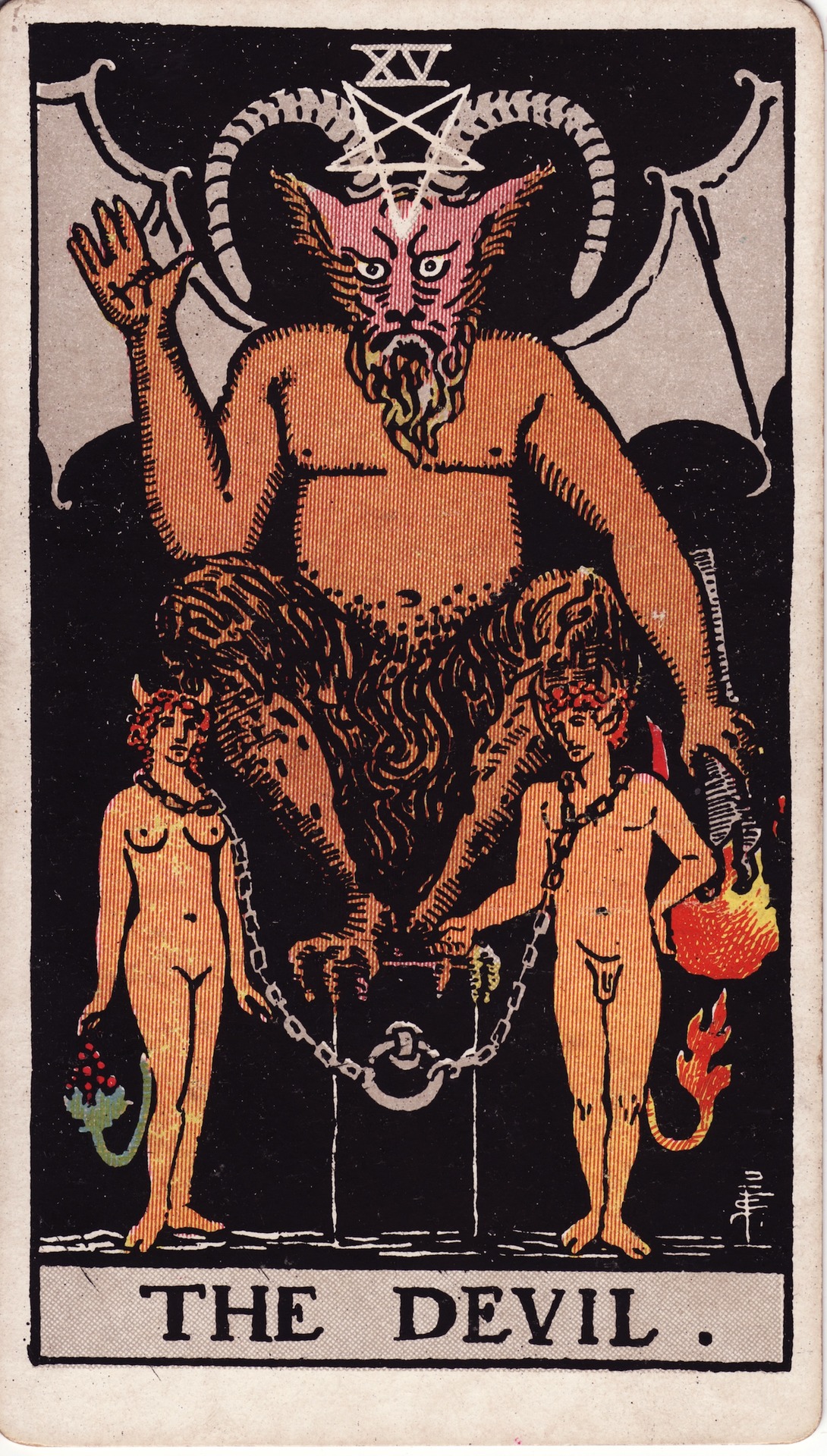
The Major Arcana cards describe life lessons that feel bigger than a passing mood. The Devil often appears when a situation is asking for a deeper shift in perspective, identity, or timing.
What The Devil represents
The Devil concentrates the theme of attachment, shadow, appetite. When it lands in a reading, it usually names the central lesson of the moment rather than a small passing detail.
This is why the card is best read as an invitation to work consciously with its energy. The point is not to memorize a slogan, but to understand what your life is being asked to practice.
The Devil symbolism and tone
Even without a deck in front of you, the archetype of The Devil carries a clear emotional signature. Its brighter expression points toward awareness of bondage. Its more difficult expression can look like self-betrayal and compulsion.
The card becomes especially useful when you ask where that tension is visible in your current situation. Symbolism matters because it translates inner dynamics into something you can actually notice.
The Devil when the energy is healthy
In a balanced reading, The Devil often signals a chance to embody its higher expression rather than merely admire it. The card asks for participation. It wants behavior, not just interpretation.
That may mean choosing honesty, discipline, surrender, courage, or patience depending on the card. What matters is that the reading points toward a wiser use of energy rather than empty reassurance.
The Devil in its shadow form
Every Major Arcana card has a difficult side. Sometimes the shadow appears because the lesson is being resisted. Other times it appears because the energy is being exaggerated or performed without depth.
Reading the shadow side well can be more useful than reading the gift. It shows what the situation becomes when fear, ego, avoidance, or overcontrol starts leading the story.
The Devil in love and relationships
In relationship readings, The Devil usually points to the quality of the lesson the connection is living through. Some cards ask for intimacy and truth, while others expose illusion, power struggle, timing, or a need for more conscious choice.
The practical question is not whether the card is "good" or "bad." It is whether the relationship is using the card's lesson to deepen, or whether it is getting trapped in the card's shadow.
The Devil in work, direction, and decision-making
Career readings tend to make the Major Arcana especially clear. The Devil often appears when the issue is larger than a temporary job question. It can mark vocation, pressure, authority, burnout, reinvention, visibility, or a threshold that changes how the work is understood.
That is why this card should not be flattened into career advice alone. It often reveals what kind of inner posture is required before the outer decision will make sense.
The Devil in a practical reading
In relationships, work, or personal growth, The Devil often appears when the issue cannot be solved by a minor tactic alone. The real change is structural, emotional, or spiritual.
A grounded reading asks: what action reflects the wisdom of awareness of bondage, and what habit keeps pulling the situation toward self-betrayal and compulsion? That question usually opens the card faster than fortune-telling language.
The deeper lesson of The Devil
Major Arcana cards become memorable because they echo long after a reading ends. The Devil stays relevant until its lesson has been integrated, not merely noticed.
That makes this card less about prediction and more about participation. The archetype reveals what kind of maturity is being asked of you now.